
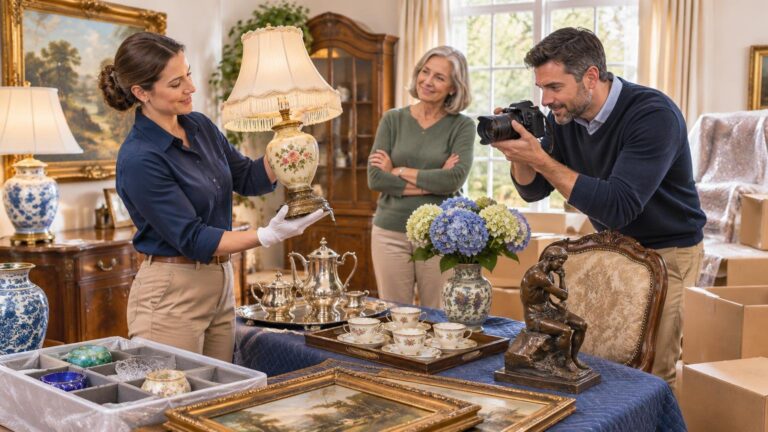
What to Do With Estate Contents When Someone Dies
When you are handling a death in the family, settling an estate, or wondering what to do when someone dies, the contents of a home can feel like a major responsibility. Furniture, art, jewelry, antiques, collectibles, and everyday household goods may all need to be identified before family members decide what to keep, distribute, donate, or sell.
A personal property appraisal provides an independent written record of estate contents and their value. Instead of asking families to rely on memory, online listings, or informal opinions, a written appraisal is based on research, comparable sales, and the specific details of the property. Bear & Raven provides CAGA-certified, USPAP-compliant personal property appraisals, and its CAGA members understand the need for clear documentation when families are dividing family inheritance or splitting up family assets. As a BBB-accredited firm, we provide a documented basis for decisions during an already demanding process.
When a Probate Appraiser in Scottsdale Is Needed
A probate appraiser in Scottsdale may be needed when estate contents must be documented and valued for formal estate records, court-required documentation, or estate settlement. An executor or personal representative is the person responsible for managing estate tasks, and that person may need an appraisal when settling an estate or valuing property for court. The right timing and scope depend on the estate, the property involved, and the intended use of the report.
We often see appraisal needs arise when an executor, attorney, trustee, or other fiduciary needs support for matters such as:
- Filing an estate inventory
- Establishing date-of-death values
- Assisting with estate settlement among heirs
- Documenting property managed by a trustee or fiduciary
- Creating a consistent record before distribution, donation, or sale
Not every object in a residence needs lengthy individual research. A qualified appraiser reviews the estate as a whole, identifies items that may have meaningful market value, and groups ordinary household contents when that approach is appropriate. This keeps the report focused on the property and purpose at hand, whether the family is dividing property among heirs or considering selling inherited items.
Timing matters. We recommend arranging an appraisal before family members remove property, before charitable donations take place, or before items are sold. This can be especially important when a parent passes away and several people are involved in decisions about inherited property. Once contents have left the home, it can be harder to identify condition, quantities, and other details. When access is limited, photographs, room-by-room inventories, purchase records, and prior appraisals can still help us understand the contents and prepare a well-supported report.
What a Qualified Probate Appraiser in Scottsdale Reviews
Choosing a probate appraiser in Scottsdale involves more than finding someone who recognizes antiques or collectibles. You need an appraiser with relevant personal property experience, CAGA certification, familiarity with estate contents, and the ability to prepare a USPAP-compliant written report.
Before beginning, we discuss the intended use of the appraisal and the correct effective date. For probate, that may mean getting a date-of-death value rather than a current value. A date-of-death value may be relevant to estate-tax valuation and to an accountant’s or attorney’s analysis of step-up in basis. This is not legal or tax advice; the estate’s attorney or tax professional can advise on the applicable filing and valuation requirements. From there, the process may include an on-site inspection, a review of photographs or available records, item identification, market research, comparable sales analysis, and completion of the written report.
Documentation gives everyone a shared reference point. A completed report can help reduce confusion when several people are involved in decisions about property, including how to split up an estate fairly. It may also support estate files, tax-related discussions, distributions to heirs, and choices about whether items should be retained, donated, or sold.
The depth of research depends on what is in the estate. Fine art, signed jewelry, unusual collections, quality antiques, and items with known history may need closer review than standard household furnishings. Condition, maker, age, materials, provenance, and market demand can all affect the final value conclusion.
Fair Market Value Is Not an Online Asking Price
Fair market value generally reflects what a willing buyer and willing seller would agree upon in an appropriate open market, with neither party under pressure to act. It is a market-based opinion, not a guess based on what someone hopes to receive.
Online asking prices can be useful starting points for research, but they do not show what property actually sells for. An unsold listing may be priced too high, may remain posted long after an item has sold, or may not accurately describe the item’s condition. We look beyond asking prices to consider comparable sales results and the features that make an item more or less desirable.
A fair market value analysis may consider:
- Recent comparable sales
- Condition, maker, age, and materials
- Provenance or documented ownership history
- Rarity and collector demand
- The market where similar property is commonly sold
An appraisal is an estimate based on market evidence, not a guarantee of a future sale price. Actual results can vary depending on where and when an item is sold, the method of sale, buyer interest, and commissions or other selling costs. That distinction is especially helpful when family members have different expectations about an item’s worth.
Prepare Information for Clear Estate Records
Before the first appraisal discussion, gather the information already available. Useful materials can include estate deadlines, the required value date, photographs, purchase records, prior appraisals, provenance, insurance schedules, and a list of property that has already been removed or distributed.
Be clear about the intended use from the start, whether the need involves probate, estate settlement, insurance scheduling, an insurance claim, donation, or another purpose. If you are considering valuing an estate for a will, the intended use and effective date should be established before the appraisal begins. An estate attorney can advise whether a personal property appraisal is needed for a will, probate, estate settlement, or another purpose. A CAGA-certified, USPAP-compliant appraisal provides a clear, documented basis for handling estate contents with greater consistency and confidence.
Clear Next Steps for Estate Contents
Bear & Raven Appraisal and Estate Services provides documented personal property valuations for executors, attorneys, and fiduciaries managing estate contents. If you need a probate appraiser in Scottsdale, our team can explain the appraisal process and the information needed to begin. For questions about your estate’s circumstances or to arrange an appointment, contact us.
Probate Appraisal FAQs for Executors and Families
Do I need an appraisal after someone dies?
An appraisal may be helpful when estate contents need to be documented for probate, estate settlement, court-required documentation, tax-related discussions, or dividing property among heirs. The executor, personal representative, estate attorney, or tax professional can help determine whether an appraisal is needed for the estate’s particular purpose.
How can an appraisal help when dividing property among heirs?
An independent written appraisal gives family members a shared record of what property is present and its fair market value. This can make discussions about dividing family inheritance, selling inherited items, or splitting up family assets more informed and consistent.
What is a date-of-death value?
A date-of-death value is an opinion of value as of the date the person died, rather than the date the appraisal is completed. It may be used for probate records, estate-tax valuation, or an attorney’s or accountant’s analysis of step-up in basis. The estate’s attorney or tax professional can advise on applicable requirements.
Does an appraisal for an inherited house include the house itself?
Bear & Raven appraises the personal property and contents in an inherited home, such as antiques, jewelry, art, furniture, and collectibles, not the real estate itself. An appraisal for inherited antiques or an appraisal for inherited jewelry can document those items for estate purposes. A real-property appraiser handles valuation of the house itself.


